
What It Costs You to Wait
A garage door that won't stay closed isn't a quirk — it's an open invitation. Leave it another season and you're looking at a door that sits cracked open overnight through the first rains of winter, letting in dust, wind-blown debris, and whatever wildlife is looking for shelter from the dry hills around Moreno Valley. An open garage is also an easy target for anyone walking a neighborhood looking for an unlocked side door into the house. And if the problem is mechanical rather than electronic, waiting usually means the failure gets worse: a door that reverses today can fail to move at all next month, often trapping a car inside right when you need it. The fix now is almost always smaller than the fix later.
Symptoms Worth Paying Attention To
- Door starts closing, stops partway, then reverses back open on its own
- Door closes most of the way, then pops back up right before touching the floor
- Door won't close at all — opener hums or clicks but nothing moves
- Door closes fine by hand but reverses only when using the remote or wall button
- Problem happens only at certain times of day or in direct sun
What a Technician Checks, in Order
1. The Safety Sensors (Photo-Eyes)
This is the first thing any tech looks at, because it's the most common cause and the cheapest to fix. Every garage door opener has two small sensors mounted a few inches off the ground on either side of the track. If the beam between them is broken, dirty, or misaligned, the opener treats it as an obstruction and reverses the door — even if nothing is actually in the way.
In this area, low morning or afternoon sun can hit the sensor lens directly and wash out the beam, which is why some doors only act up at certain times of day. Dust buildup on the lenses does the same thing, and dust is a near-constant issue here outside of the rainy months. The fix is simple: wipe both lenses clean, check that both sensor lights are solid (not blinking), and make sure nothing — a stored bike, a leaf blower, a shifted shelf — is sitting in the beam's path. If the sensors were bumped out of alignment, loosening the wing nuts and gently adjusting the angle until both lights go solid usually solves it in minutes.
2. The Close-Force and Limit Settings
If the sensors check out, the next stop is the opener's limit and force settings. These tell the opener how far to travel and how much resistance to tolerate before assuming it's hit an obstruction. If the close-limit is set too short, the door never fully seats before the opener thinks it's done and reverses it. If the force setting is too sensitive, normal friction from the tracks or a slightly heavy door is enough to trigger a reversal. Adjusting these is usually a matter of turning small dials or running a reset sequence on the opener's logic board — straightforward for a tech, but easy to get wrong without the right reference points, which is why DIY attempts here often end with the door now reversing in a different spot.
3. Track Alignment and Rollers
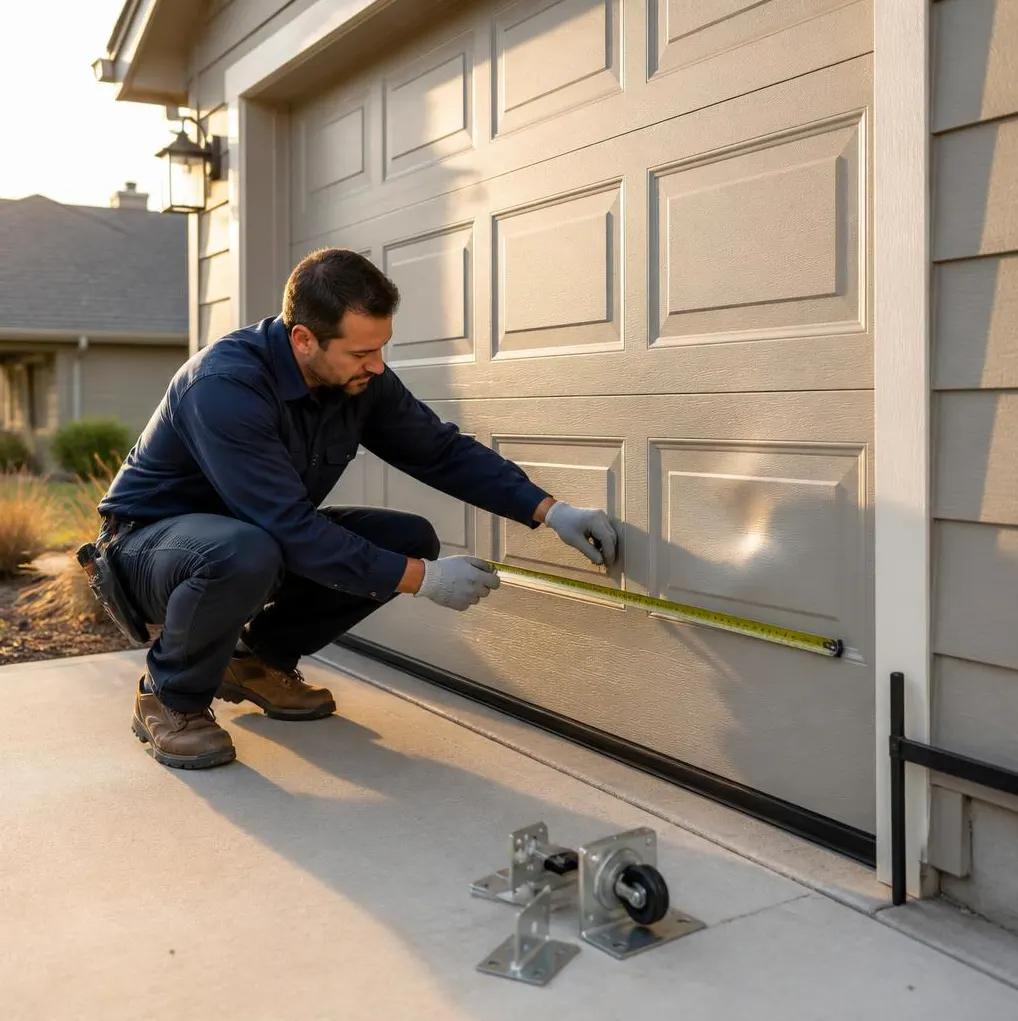
Next, a technician checks the tracks themselves for bends, gaps, or debris, and inspects the rollers for wear or cracking. A door that binds or drags at one spot in the track can trigger the force sensor even with correct settings. Homes here see a fair amount of temperature swing between hot, dry stretches and cooler, wetter winter weeks, and that cycling can loosen track bolts or shift brackets over time, especially on older installations. The fix ranges from re-tightening and re-aligning the track to replacing worn rollers, which is a good move to bundle into routine garage door maintenance rather than waiting for a full stoppage.
4. Spring Tension and Door Balance
If the door is heavy to lift by hand, or if it seems to struggle and shudder on the way up before failing on the way down, worn or unbalanced springs are a likely culprit. An opener isn't built to lift the full weight of a door — the springs do most of that work. As springs lose tension, the opener has to work harder, which can mimic an obstruction and trigger a reversal, or simply stall the door altogether. This isn't a DIY fix; garage door springs are under heavy tension and spring replacement should be handled by someone with the right tools and training.
5. The Opener's Logic Board or Wiring
If everything mechanical checks out, the last stop is the opener's control board or wiring. Frayed wiring to the sensors, a failing capacitor, or a glitching circuit board can all cause intermittent reversals that don't follow an obvious pattern. At this point, opener repair or, if the board is failing, opener replacement is usually more cost-effective than chasing an intermittent electrical fault indefinitely.
When to Call Moreno Valley Garage Door Co
If you've wiped the sensors, checked for anything blocking the beam, and the door still won't close reliably, it's time to call. We'll run through sensor alignment, limit and force settings, track condition, and spring balance in that order, and handle whatever's needed — from an opener repair to a full spring replacement — the same visit in most cases. If the door is reversing because of a bigger imbalance issue, we'll walk you through the trade-offs between a repair and a full garage door installation before any work starts.
Don't let a reversing door turn into a stuck one. Call Moreno Valley Garage Door Co today and get it fixed before the rain starts in Moreno Valley, CA.